
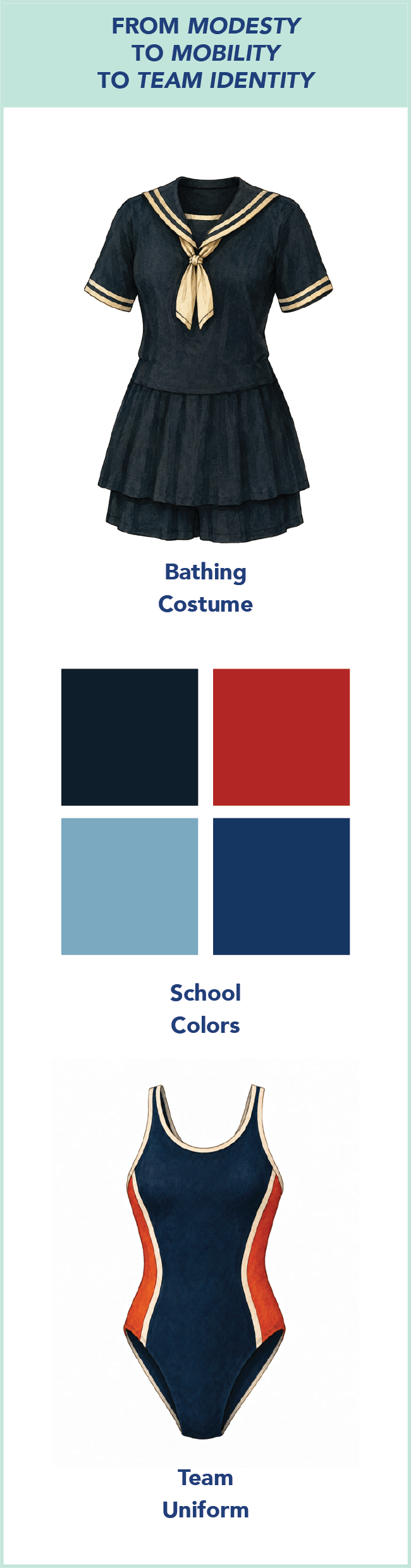
Early
History
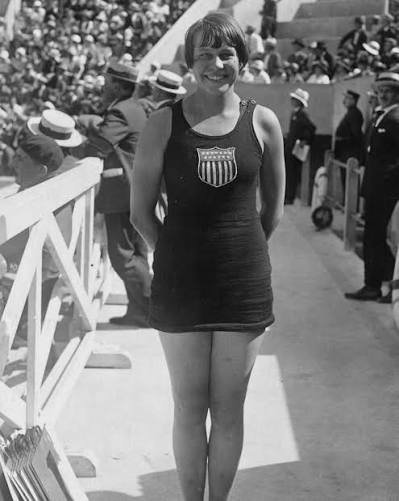
Miss Morelins, 1924
via World Aquatics on Instagram
The history of swimwear as attire for active swimming begins for women in the 1920s as modern women adopt the swimsuit leaving behind the bathing costumes made for more leisure activities that were popular throughout the nineteenth century.
While women began competing in Olympic swimming in the 1912 games, American women were banned from participation until 1920 in Antwerp, Belgium due to the long skirt rule that required women to wear swimming costumes with full skirts so as to not expose any of the legs.
During this period swimwear brand Speedo (originally called Fortitude until 1928) opened in 1910 while the leading bathing suit manufacturer, Jantzen (opened in 1913), originally called the Portland Knitting Company sold “woollen suits”; both companies would later sell the lighter weight knit one piece suit from World War I throughout the 1920s. (Ibbetson, 2020, p. 14)

Collegiate Women’s Swimming
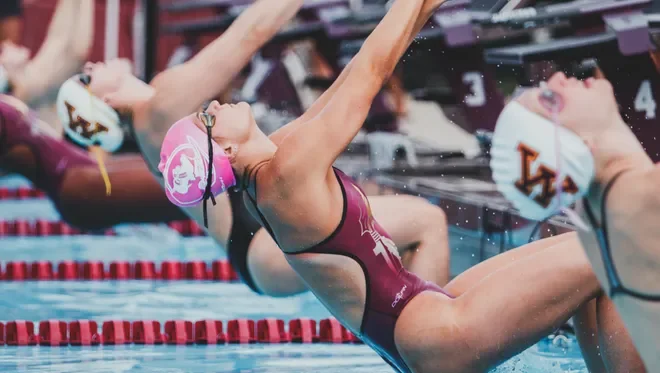
Florida State University, via Tallahassee Democrat
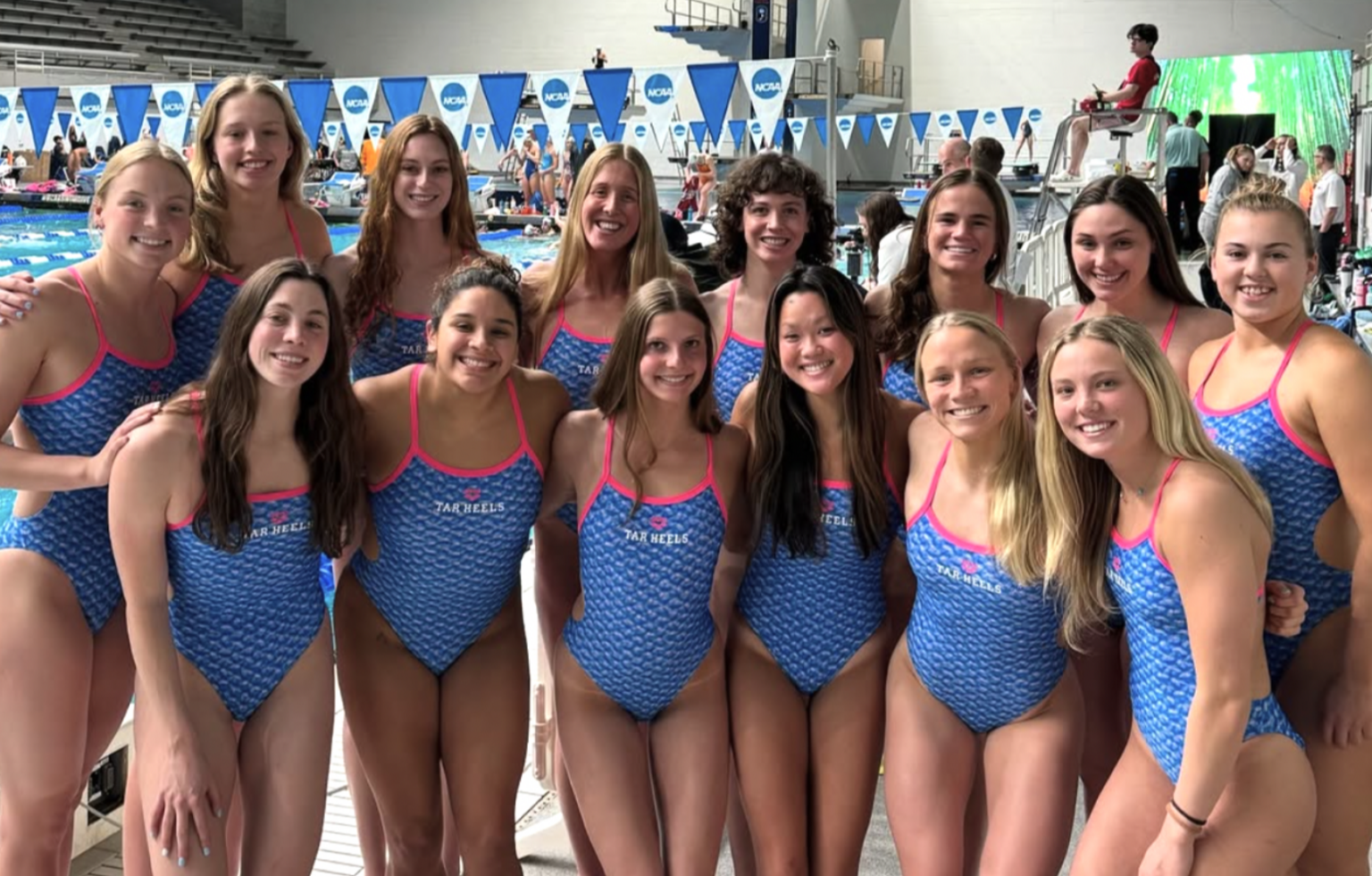
UNC Tarheels, via UNC Swim Dive on Instagram
At the turn of the twentieth century, universities began to use school colors to distinguish players and fans from opposing teams at sporting events. As a result, school colors began to uphold the characteristics of institutions of higher learning, used in the brand identity of the school including logos, merchandise and websites. Most often agreed upon through a student, staff and faculty vote, adopting school colors became a popular way to create comradery.
Women’s competitive swim teams became prevalent in American colleges and universities during the 1970s including Duke University and North Carolina State University with many immediately adopting uniforms featuring school colors. The National Collegiate Athletic Association held its first competitive swim championship in 1982 (NCAA.com, 2026).
Montreal Olympics
1976
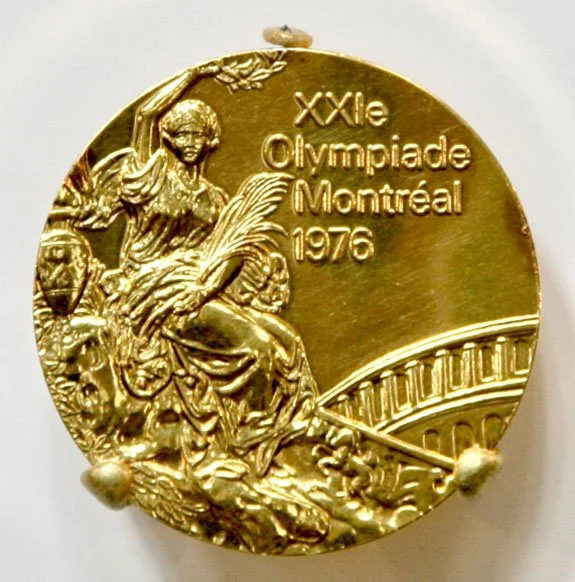
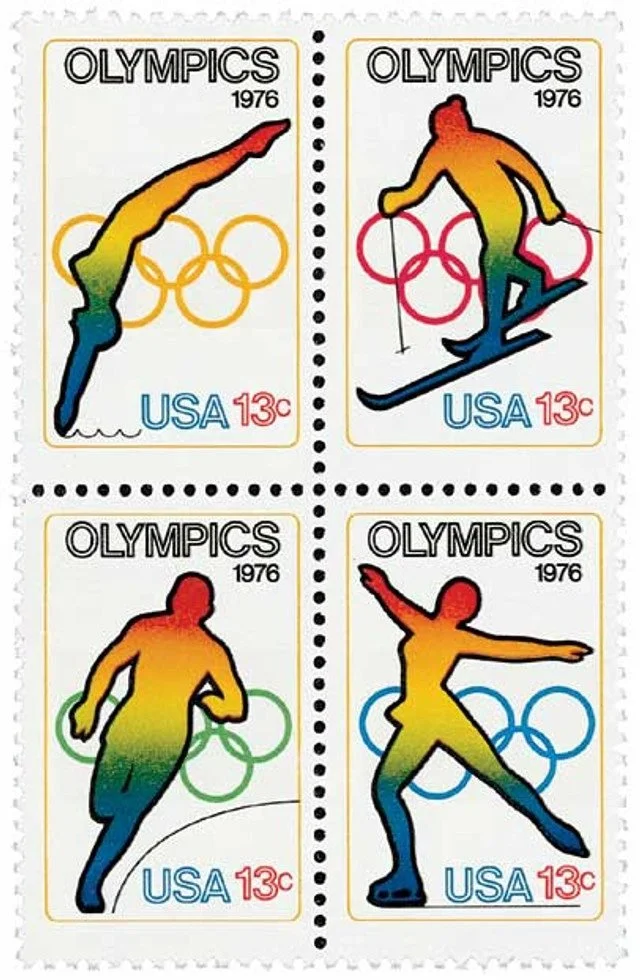
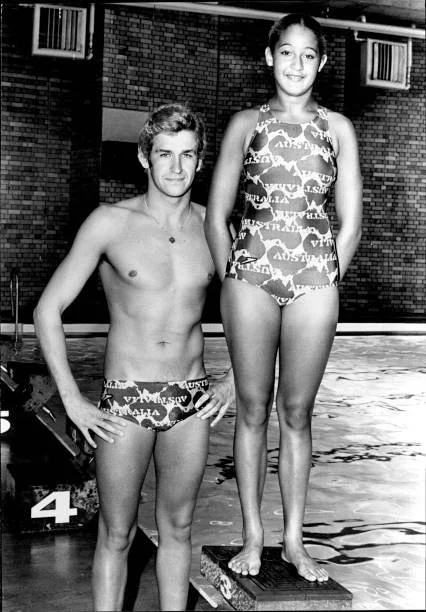
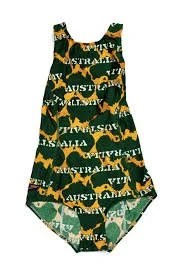
The 1976 Olympics featured suits in bold colors and bright patterns and marked a significant preference for printed swimsuits by a wide
variety of countries including the United States and Germany.
The Australian Olympic team stood out that year in a printed suit featuring, “a distinct all-over print of green maps of Australia on a good background created by Gloria Smythe (Speedo designer 1962-1990)" (Schmidt, 2013, p. 59). According to Schmidt, author of The Swimsuit: Fashion from Poolside to Catwalk, the suits cause a stir because fashion experts claimed the suits were “bastardized and gimmicky”, however the print became linked to the team, “branding them for global consumption” even through none of their swimmers medaled at the Montreal Olympic Games in 1976 (Schmidt, 2013, p. 59).
The 1976 suits reveal that comeptitive swimwear does more than support athletic performance. Swimsuits also communicate identity, visibility, nationalism, and brand value. Print, color, and silhouette can shape how teams are remembered, showing that design choices play a role in the cultural meaning of sport.